One good thing I'm taking away from this time of distance learning is that I get more time to read. Before teaching reading I had never heard of ARCs. Now that I have, I love the idea of them. The thought that I am one of the first people to read a book before it is available to the public is so enticing. A few years ago I was able to attend the NCTE Conference in St. Louis and I received numerous ARCs. My students, also, liked the idea of reading a book before it was published for the masses.
Recently I received two ARCs from two different sources. One was sent from the author because I won a Facebook contest. The other was sent by the publisher because I won a Goodreads challenge. Being selected to receive a book is one of the best things in my opinion. I'll post more about how I use Goodreads and the student friendly version, Biblionasium, at another time.
Back to the ARCs.
The first book, Super Puzzletastic Mysteries, I am extremely excited about. I have read many Chris Grabenstein books including: the Escape from Mr. Lemoncello's Library series, Welcome to Wonderland, and The Island of Dr. Libris. His books are always entertaining and pull you into the world he creates. My favorite genre right now is mystery and realistic fiction and this fits right in. It is a book of short mysteries. I like that at the end of each short story you are given the choice to figure it out on your own or go to the back of the book for the continuation of the story and the solution. Short story books are what I like to recommend to my students because it allows them to familiarize themselves with multiple authors in one book. If they really like a short story in the book we can search for other books written by that author. If they like one author already, this allows them a low risk way of trying out other authors while still having that comfort of an author they already enjoy reading. I'm only two chapters in, but so far it is definitely one I will recommend to my students.
The second book, Raybearer, is a debut Young Adult fantasy written by Jordon Ifueko. Fantasy is normally not what I choose for myself, but most students, I've noticed, like to get lost in a world that is different from their own. This is what drew me to this book. The fact that it was written by and starred a person of color added to the appeal of the book. I am a firm believer in books as windows, doors, and mirrors. Because this is considered a Young Adult book gave me pause because it may not be something I can put in my classroom library for my fifth graders. The age range says that it is for 12 years old and up, so once I have finished reading it I will make the decision on whether this goes in my classroom library, or if I will give it to my husband for his freshman/sophomore classroom library.
As I started reading Raybearer I fell in love with how the author described her world and her word choice. It pulled me in right from the start. Another thing that pulled me in is how the author describes the book. "It's the book I needed growing up: a world where coily-haired fairies grant wishes in mango orchards, cursed princes ride leopards over Asiatic mountains, and dark-skinned girls dare to challenge immortal emperors."
I hope that you will get the opportunity to read both of these books and recommend them to the readers in your life. Once I have finished both I will write about my final thoughts on them.
I'm a 5th grade reading teacher who loves books and trying new things in my classroom.
Monday, April 6, 2020
Friday, April 3, 2020
Poetry
When I was in 8th grade I started writing poetry. I've posted it here. I loved being able to put my thoughts on paper (because in 8th grade I didn't have a computer to use). Getting to express myself was important to me. Allowing myself to pour everything out gave me a sense of freedom. I now write poetry every once in a while, but I still enjoy going through my old poetry and seeing how far I've come.
It makes me think that this should be something we do with our students. We should allow them to be creative. Yes, they need to practice writing for certain purposes, but we should also give them time to write from their hearts.
Writing should also be collaborative. There should be students discussing ideas with each other. Let them write for a few minutes to get some ideas down and then have them turn and talk to share ideas. There should be a rubric to their writing, yes, but the content could also be open to interpretation. When marking student writing, build them up while showing them how to improve. Criticism should be constructive. It should give them an area of needed improvement, but also highlight the strengths and applaud effort and ideas.
I love that poetry can be abstract as well as concrete. Challenge students to create two poems. One with an abstract view of a subject and one with a concrete view of the subject. You can have students switch the abstract papers and see if they can figure it out or have them recite it to the class and have the class guess. Then, they can read the more concrete view and see if the students were correct in their assumptions.
The poetry can show us what they have learned and give them ownership of the material. They can also see how writing can be fun. With this poem I wanted to challenge my students to figure out what the subject of the poem was. Can you figure it out?
If we really want to show growth in our students, have them create a portfolio of all their writing and compare it. This could go from early elementary and follow them through their school careers. How well they write in 10th grade should be better than how they write in 5th grade and with the portfolio they can see how far they have come or see how far they still need to go if they have stopped trying.
What ways do you use poetry in your class?
It makes me think that this should be something we do with our students. We should allow them to be creative. Yes, they need to practice writing for certain purposes, but we should also give them time to write from their hearts.
Writing should also be collaborative. There should be students discussing ideas with each other. Let them write for a few minutes to get some ideas down and then have them turn and talk to share ideas. There should be a rubric to their writing, yes, but the content could also be open to interpretation. When marking student writing, build them up while showing them how to improve. Criticism should be constructive. It should give them an area of needed improvement, but also highlight the strengths and applaud effort and ideas.
I love that poetry can be abstract as well as concrete. Challenge students to create two poems. One with an abstract view of a subject and one with a concrete view of the subject. You can have students switch the abstract papers and see if they can figure it out or have them recite it to the class and have the class guess. Then, they can read the more concrete view and see if the students were correct in their assumptions.
The poetry can show us what they have learned and give them ownership of the material. They can also see how writing can be fun. With this poem I wanted to challenge my students to figure out what the subject of the poem was. Can you figure it out?
Runaways
We couldn’t stay any longer.
We were being hunted by them.
All we had to do was get into the field.
Sounds so simple.
It’s not that simple.
It’s never that simple.
The light was baring down on us.
So focused. So intense.
Everyone was moving so frantically.
Except for them.
They picked us off one by one.
They got my friend and I got side-tracked.
They saw me and moved closer.
I’m almost home.
Please give me more ti…….
Elizabeth Seibel – October 8, 2011
*Can anyone tell me who/what the runaways are?*
If we really want to show growth in our students, have them create a portfolio of all their writing and compare it. This could go from early elementary and follow them through their school careers. How well they write in 10th grade should be better than how they write in 5th grade and with the portfolio they can see how far they have come or see how far they still need to go if they have stopped trying.
What ways do you use poetry in your class?
Thursday, April 2, 2020
Dreamscape by Squigglepark
Have you ever played Clash of Clans? It's an awesome app that can be found in the Android Store. In Clash of Clans you build a city and give it defenses and build an army to battle other cities. This is the basic plan for Dreamscape as well. Guess what?! It's all free! Students can choose to pay for a subscription to the program which unlocks more for them, but they can do everything in the program without the subscription. I have about 20 students who have paid for the subscription and it has made other students want to pay for the subscription as well because of the awesome benefits.
In Dreamscape, students will create a Dwell which will house their army, resources, and other defenses. Students will build their army and challenge other players by attacking their Dwell. In order to level up and get better resources, armies, and defenses, students must answer comprehension and skill questions. The only way to progress in this game is by reading and answering questions!
In Clash of Clans time will pass if you just log out of the game and your resources and other items will improve. In Dreamscape, the only way for time to pass and for you to upgrade things is to answer the questions correctly.
I love this game. Yes, I have my own Dwell that I have built up so that I can battle my students. My username is ElizabethS15 in case your students want to try to challenge me. They enjoy trying to destroy my Dwell. I read the passages and answer the questions just like the students do. We take time during class to play the game. Students sit around the room in comfortable positions and play. They are helping each other answer questions (because they cannot upgrade their items unless they get questions right).
The higher the level of items, the more questions a student must answer correctly in order to upgrade it. I love that this is the case. The more the students play, the more they want to play. More questions required to upgrade items means more time students are spending answering questions and working on skills.
As a teacher I am able to assign specific skills or reading passages to my students. During this distance learning time Dreamscape also created specific passages and skill work for students for this time. I get to view my students' progress on the skills they are working on including how often they are getting certain skills and their percent correct. It is easy to differentiate for my students because I can choose grade level skills for each individual student. Since I teach 5th grade I am able to provide easier or more challenging work since Dreamscape offers up to 8th grade level material.
One of the best parts is that the creators of Dreamscape are constantly trying to make their program better. They listen to teachers. They listen to the students. They ask for ideas and opinions and actually implement them. They are quick to respond and always helpful. For teachers they are continuously providing Professional Development in how to implement the game.
If you have not tried Dreamscape with your students, you need to. Let me know how it goes!
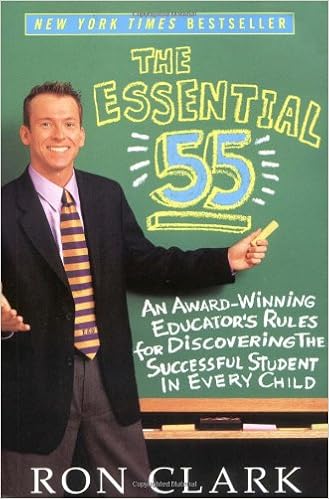
The Essential 55

I did, however, find The Essential 55. I guess fate decided my book choice. It has been a good read so far. I am on Rule 20 right now. I have gotten good insight into the author, Ron Clark, and how he runs his classroom. I think his approach to teaching and students is one that everyone should take. He definitely goes above and beyond for his students. I'm not saying that everyone needs to go out and raise thousands of dollars to have an impact on their students, but we can do what we can to give our students learning experiences they will remember forever.
His approach to teaching brings the curriculum to life for his students and shows them how it will apply to their lives in the real world. Taking what they are learning and teaching them how to make business calls, write an ad for a newspaper, and write letters to approach businesses for donations are all skills they will need to have beyond school. We should approach our students and our teaching the same way. Give them skills that will help them succeed in life and apply it to the standards we are required to teach.
As a reading teacher, I can bring in real life examples of texts that people use in their adult lives and show my students how to work through it. I can teach them how to have professional conversations, write letters, answer phone calls, behave in an interview, etc. All of these things have a literacy connection. Teaching my students to not only analyze characters in stories, but analyze the characters in their lives (friends, teachers, family members, etc.) will give them skills they need.
Ron Clark talks also about taking an interest in your students' lives. Not just a superficial interest. He mentioned learning how to double dutch. It took him a long time to learn. He failed numerous times in front of his students, but that is what they did at recess so he didn't give up. By the end, his relationship with them and their respect for him had grown. It's not enough to just ask questions about students' interests and then move on. Bring it up a few weeks later to let them know that you remember and really do care.
The power of positivity is also apparent in the book. It seems obvious, but this is something we need to teach our students. Help them to understand it is better to shine a light so that everyone can see, than to keep the light hidden for only your use. Students love to grumble when given assignments. We need to help them see that to view things with a positive lens, or at least not a completely negative lens, will get them through their lives much happier.
I still have more to go before I'm finished with this book, but I have learned quite a bit from the parts I have read so far. Let me know if you have read the book and what your favorite takeaways are from it.
Friday, March 27, 2020
Book Study

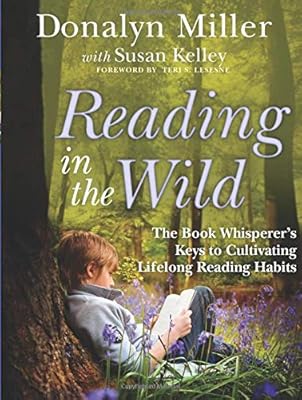
I loved The Book Whisperer and have another blog post on that book. Reading in the Wild is supposed to be more practical tips for putting in place everything that Donalyn Miller stands for. I want to make my students wild readers.
A Novel Approach is going to help me structure class time around novels and self-selected reading. I want to learn a better way to approach this for next year so that I can incorporate the novels that I have picked out (Refugee, Restart, A Long Walk to Water, Love That Dog).
The Essential 55 is not reading specific, but just educator and student specific. This one will help with teaching students skills they need in order to get along in the world.
Whatever I decide, I'll come here to share my thoughts.
Subscribe to:
Posts (Atom)