Saturday, October 24, 2020

Go With the Flow

 To be a teacher means that you have to go with the flow. You can have the most amazing plans ready, but inevitably something comes along and makes you change course. 

While doing all my work getting Restart ready for our novel study I started charting out the rest of my semester. Even doing a full chapter a day, we wouldn't have finished the book before Christmas break and I am not one to leave students hanging on a book over 2 weeks of vacation. All those plans will be put to use at some point, just not right now.

So here we are. 

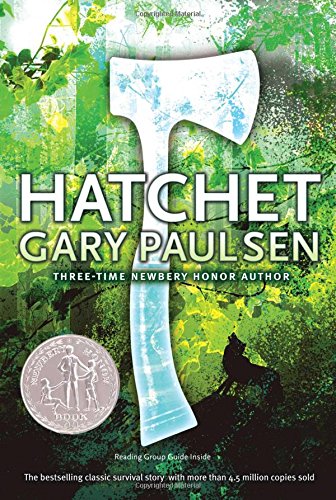
We are now going to read Hatchet by Gary Paulsen. We have already read the first chapter and the students are hooked. The good part about this book is that there are other books in the Brian series so my few students who have read the book before and are choosing not to read it are going to read Brian's Winter. 

While planning out this novel study I practiced with a group giving students assignments on what they were to focus on while we read. It didn't turn out as planned so I tried a little differently during the next class. I still wasn't satisfied. My next class was the class that finally got what I needed. Now the students are going to focus on vocabulary and characterization for the book while we discuss the plot, literary devices, and signposts together as a class. 

I think this will work better for my students now. They will be working on finding new words, difficult words, interesting words, confusing words, etc. I want them building their vocabulary so I'm not giving them specific words to look for. I want them to have ownership of their learning. 

I will be keeping notes over all the other parts of the book so that they can have access to it. They will help me build the notes, but I will be the one compiling them. They will be responsible for their own vocabulary and characterization notes. 

I'm also going to be telling them about their One Pager assignment that will be completed after we finish the book. This way they know what to be on the lookout for while we read. I love One Pagers. I love how it allows students to be creative and as artistic as they want to be. 

When was a time you had to go with the flow during your teaching?

Friday, October 16, 2020

Novel Study: Restart by Gordon Korman

 My plan was to read The Westing Game with my students this year like I do every year, but I found out that about 10 of them have already read the book. It's not fun to read a murder mystery when you have already figured out the mystery.

So I'm going to read Restart with my students instead. It's not a murder mystery, but I'm really excited to dive into this book with my students. This nine-weeks we are focusing on Literary Elements so I think this is the perfect book for that objective. 

The skills that we will be working on:

  • Plot
  • Setting
  • Characterization
  • Conflict
  • Point of View
  • Literary Devices
  • Paraphrasing
  • Research
  • Notice and Note Signposts
  • Theme
  • Compare and Contrast
  • Fact and Opinion
  • Author's Purpose
I love the fact that this book is told from multiple perspectives because we can get really good compare/contrast of situations and characters through this format. Within the first few chapters we get to see a scene told from the perspective of 5 different characters and can discuss the whats and whys of that situation. 

Also, with multiple characters being the narrator, we get to see a lot of characterization from different perspectives. 

So that it's not overwhelming for my students (5th grade) I have assigned them roles for each chapter. They will be in charge of one or two things for two chapters and then they will get a new role for two chapters. Everyone will get to focus on something while we read which keeps them accountable and helps them to think deeply about their role and we will discuss what everyone has been focused on at the end of each chapter. They will do each role for two chapters before switching to a new role so that they get enough practice finding each thing. 

Example: 
Johnny and Elise will be looking for minor character characterization for two chapters. They will write down examples of characterization about all characters except Chase Ambrose for chapter one and all characters except Shoshanna Weber for chapter two. Chapters three and four they will be focused on literary devices. They will keep track of all literary devices and what their possible meanings are. Chapters five and six they will work on Contrasts/Contradictions and Words of the Wiser. 

To begin we will do a little research and writing on amnesia and bullying. They will need this background information and this mindset before getting into the book so they can understand what is happening to Chase throughout the story. 

Throughout we will be reading picture books to get practice with the signposts and to get more stories about amnesia and bullying. I'll probably pull in some articles and poems if I can find them. 

During RTI I will pull the students that I think need some more practice on literary elements since that is our main focus. 

I can't wait to get started on Monday!

Sunday, July 5, 2020

Chains by Laurie Halse Anderson


This book has been in my library for years. I always wanted to read it, but never got around to it. I am so happy that I brought it home with me when schools closed so that I could. 

There are many books about enslaved people, but a lot of them take place during the Civil War. This one and its companions take place during the American Revolution. Since I teach 5th grade, which is a US History year, this is a perfect book for my students. 

Learning about Isabel and her struggles was heartbreaking. I have heard throughout my life how enslaved people were treated, but hearing it described about a young child broke my heart. Her fierceness through it all was inspiring. She did not let her treatment break her down. She did not give in. I wish I had the other books in the series, but will have to wait until I can get them to see how her story ends. 

We have to show our students what life was really like. We can't sugar coat things. I have heard about text books that explain how enslaved people didn't have it that bad and sang and danced and had a good time. This is not true. Our students deserve to know the truth and the memory of the enslaved people needs to be honored. Thank you Laurie Halse Anderson for this book. 

Tuesday, May 5, 2020

Google Sites, Slides, and Drawings

Google Sites - WikipediaGoogle Slides: Free Online Presentations for Personal UseFive Great Ways To Use Google Drawings in the Classroom!
These are amazing resources for teachers. I have been playing around with them pretty much non-stop since I realized all that I could create with them.

Google Sites

1. I created a class website with Google Sites that I can use just like a newsletter, method of contact, resource database, and calendar. My students' parents can view the site to find out information about what's going on in class which means I don't have to print out weekly newsletters to keep them informed. I can post permission slips and other class updates to the site for them to view. My students can go to the website to see upcoming event dates, links to websites they can use, and find resources for their notes and our learning. 

2. Another great way to utilize Google Sites is a digital escape room! So much fun. On each page in the site I put parts of a story for students to work through to figure out their passwords. I utilized Google Forms for students to input passwords and escape the room. I created a clickable PDF in Google Drawings so that students could "search" the scene to find clues.

3. Students can create their own Google Sites as a digital portfolio of all their work. They can share it with the teacher, other students, and their parents. This is a great way to give kids ownership over the work that they do and give them a larger audience than just the teacher.

Google Slides

1. Interactive worksheets are a game changer for me. Instead of boring handwritten worksheets now students can interact with their assignments. Instead of cutting and pasting which takes FOREVER students can now just click and drag to organize information. They can also highlight, underline, and circle information. They can leave me comments and I can leave them stickers and feedback.

2. Digital choice boards. So much easier than creating paper assignments for stations. I can create a slide that has links to all the options they have for the week. They can choose the order in which to complete them and can put all their work into the Google Slide so I don't have to search everywhere for it. No more "I lost my homework." 


3. I just spent all day working on creating a digital notes binder for my students. I made a binder cover that looks like it's on a student desk. They can design their own cover using Google Drawings or right in Google Slides. This will give them ownership of the notes. Then I created a table of contents that links to each of the objectives in the "binder". I gave dividers to each of the objectives so they can keep track of their notes. If they need more space for an objective they can make a duplicate slide and continue taking notes. They will be able to type in their own notes and add images that they find or create their own images. It is all about holding them accountable and giving them ownership of their learning.

Google Drawings

1. Clickable PDFs are incredible. You can create a scene and link different parts of it to whatever you need: images, documents, websites, etc. After you have created your scene you can download it as a PDF and it will keep the links embedded so that whoever receives it will be able to click the links and access the information.

2. Creating background images. Using Google Drawings I can create the images that will serve as a backdrop for my Google Slides. The digital notebook pages were all created in Google Drawings and then set as the background in Google Slides so that students can't move anything on the page. They can type over it in Google Slides, but they can't manipulate the picture in any way. 

3. Bitmoji images. So much fun to create. Imagine all the things your little person can do and send them on adventures. Your students will love it (and so will you)!

Tuesday, April 14, 2020

Google Educator Certification Level 1

Google Certification Level 1 | NYSCATE
I did a thing. I went through all the training and took the test and I am now a Google Certified Educator for Level 1. My next step is Level 2 of course. I plan on starting that journey later this week. This was a great experience for me as an educator and one of the best professional developments I've been through. 

Why is it one of the best professional developments I've been through? Because it's completely relevant to my classroom experience and I can start implementing the information right away. That is one of the top marks for me in evaluating professional development. If I can't put the information to work right away or see how it will benefit me as an educator or my students, I can't describe it as effective. I will use a majority of the skills I learned from this training in my classroom. 

I already knew a lot of the information from the trainings, but the way the information was applied helped me to see how it could benefit my students more than how I was already using it. Google Docs will be a resource I can use for reading groups next year. Students can use a shared Google Doc to discuss the book they are reading and come up with theories, themes, and more. Since it is updated every time a student contributes to it, they can all have their say and every voice is heard. I can look at the history and see which students are participating which will allow me to see that all of my students are contributing to the discussion. 

Google Slides can be an interactive resource for my students. I have already created a Google Slide over Main Idea, Topic, and Details where my students will move shapes around to show me they understand the material. This is a game changer for me. I love creating resources and used to always use Microsoft Publisher, but now Google Slides and Google Drawings will be my go to programs.

This next part is a little from Level 2, but I don't know why I didn't think about it before. I have been wanting a way for my students to blog about their reading lives. I went through so many options to find the perfect program for my students and couldn't come up with anything. Then, I found Google Sites which will serve a great purpose for my students next year, but Blogger is what I've been looking for and I didn't even think about it until I started doing the Google training. It's perfect and my students can link it to their Google Site. 

I have been doing a shared Google Sheets to keep track of my team's AR points and through this training found out how to only share parts of that Google Sheet with my team. This is perfect so that my team members only have to view the parts that are relevant to them. I am so excited to use this function next year. 

So many ideas are floating through my head right now. This is what I love about teaching. There are always new things to utilize and ways to grow as an educator. I love learning and finding ways to engage my students. Next year is going to be awesome! 

Have you become a Google Certified Educator?

Saturday, April 11, 2020

Online Professional Development


While we continue in distance learning, teachers must continue to work towards bettering themselves as educators. My school is doing distance learning packets which means my days at home are pretty free, unlike my husband who teaches at the high school and must do online lessons and video classes.

On May 8th our schools will be finished for the semester, but teachers are contracted until May 22nd. During this time I am required to (and will happily) continue professional development. We have been tasked with a few things from our district and campus.

  1. District-Wide book study - the book is yet to be determined, but the district is providing the book which is really nice.
  2. Online courses through Vanderbilt college. I have chosen some modules on RTI, Helping Students Become Independent Learners, CSR: A Reading Comprehension Strategy, and Progress Monitoring: Reading. 
  3. PL Focus activity - I have chosen to become a Google Certified Educator. I have finished the training for level one and will take the test within the week. After that I will move on to level two.
  4. Online professional videos and articles provided by our principal. 
  5. Curate a Google Drive of resources to be used throughout the year for specific standards (all teachers will collaborate on this).
Along with all of that, as I have mentioned, I am doing some professional and leisurely reading of my own. I will also have to make sure I continue to contact students until May 8th. 

I would definitely much rather be in the classroom working with my students face to face, but I am enjoying all the time to work on professional development. It is forcing me to do things that I hadn't taken the time to do before: become Google Certified and work on my blog more. 

One thing that I love as an educator is learning more about my craft. It doesn't feel like work or overwhelming because I love what I do and I love finding new and better ways to do it. Plus, I have an incredibly supportive district that surprised the educators with signs in our front yards that say "Superhero of Guymon Public Schools". That is pretty awesome. When you have that kind of support, it makes you want to do more.


Monday, April 6, 2020

Authentic Book Life

Goodreads Ratings and How to Read Them | Upstart Crow Literary     BiblioNasium Releases Reviews Feature that Allows Kids to ...
One thing that I try to get across to my students is that reading is something that they will take with them the rest of their lives. I show them every day that I still read books for pleasure. I post pictures of books that I have read in my classroom. I write on a whiteboard the title of the current book I am reading. I talk to my students about the books I'm reading and recommend books to them every chance I get. They see me check out books from our school library. They see me get emotional with books. They see that reading can be a part of an adult's life. 

Something that helps me prove this to my students is goodreads. I show them my account before I show them Biblionasium. On goodreads I can post book lists. I have books that I want to read, books that I am currently reading, and books that I have already read. I show them that my friends on goodreads are also reading and updating their reading lists. I show them the challenge I set for myself and how I update what I'm reading each day, like a reading log that some students don't like to do. I can also show them the reviews that my friends and I write about the books that we read. 

Once they see that adults actually keep track of their reading this way I send them to Biblionasium. I set up accounts for all of my students. This website is just like goodreads. Students can create their own book lists. They search the site and add books to their bookshelves. They can write reviews to the books and send recommendations to their friends. They can also set challenges for themselves and update how much they read each day. 

Why do I choose Biblionasium over goodreads for my students? The main reason: age. My students are still young. Biblionasium allows me to have a sense of peace with what my students are doing. Goodreads is available to people of all ages. Some will post things that I may not approve of my students having access to. Biblionasium is geared towards students so I know that what they come across will be appropriate for their age range. The students enjoy the badges that they can earn by doing different things on the website. It gives them ownership of their reading lives and gives them some freedom.

In order to raise readers, we have to show kids that we are readers. This is one of the things I feel like I do well in my classroom.

ARCs (Advanced Readers Copy)

     
One good thing I'm taking away from this time of distance learning is that I get more time to read. Before teaching reading I had never heard of ARCs. Now that I have, I love the idea of them. The thought that I am one of the first people to read a book before it is available to the public is so enticing. A few years ago I was able to attend the NCTE Conference in St. Louis and I received numerous ARCs. My students, also, liked the idea of reading a book before it was published for the masses.

Recently I received two ARCs from two different sources. One was sent from the author because I won a Facebook contest. The other was sent by the publisher because I won a Goodreads challenge. Being selected to receive a book is one of the best things in my opinion. I'll post more about how I use Goodreads and the student friendly version, Biblionasium, at another time.

Back to the ARCs.

The first book, Super Puzzletastic Mysteries, I am extremely excited about. I have read many Chris Grabenstein books including: the Escape from Mr. Lemoncello's Library series, Welcome to Wonderland, and The Island of Dr. Libris. His books are always entertaining and pull you into the world he creates. My favorite genre right now is mystery and realistic fiction and this fits right in. It is a book of short mysteries. I like that at the end of each short story you are given the choice to figure it out on your own or go to the back of the book for the continuation of the story and the solution. Short story books are what I like to recommend to my students because it allows them to familiarize themselves with multiple authors in one book. If they really like a short story in the book we can search for other books written by that author. If they like one author already, this allows them a low risk way of trying out other authors while still having that comfort of an author they already enjoy reading. I'm only two chapters in, but so far it is definitely one I will recommend to my students.

The second book, Raybearer, is a debut Young Adult fantasy written by Jordon Ifueko. Fantasy is normally not what I choose for myself, but most students, I've noticed, like to get lost in a world that is different from their own. This is what drew me to this book. The fact that it was written by and starred a person of color added to the appeal of the book. I am a firm believer in books as windows, doors, and mirrors. Because this is considered a Young Adult book gave me pause because it may not be something I can put in my classroom library for my fifth graders. The age range says that it is for 12 years old and up, so once I have finished reading it I will make the decision on whether this goes in my classroom library, or if I will give it to my husband for his freshman/sophomore classroom library.

As I started reading Raybearer I fell in love with how the author described her world and her word choice. It pulled me in right from the start. Another thing that pulled me in is how the author describes the book. "It's the book I needed growing up: a world where coily-haired fairies grant wishes in mango orchards, cursed princes ride leopards over Asiatic mountains, and dark-skinned girls dare to challenge immortal emperors."

I hope that you will get the opportunity to read both of these books and recommend them to the readers in your life. Once I have finished both I will write about my final thoughts on them.

Friday, April 3, 2020

Poetry

When I was in 8th grade I started writing poetry. I've posted it here. I loved being able to put my thoughts on paper (because in 8th grade I didn't have a computer to use). Getting to express myself was important to me. Allowing myself to pour everything out gave me a sense of freedom. I now write poetry every once in a while, but I still enjoy going through my old poetry and seeing how far I've come.

It makes me think that this should be something we do with our students. We should allow them to be creative. Yes, they need to practice writing for certain purposes, but we should also give them time to write from their hearts.

Writing should also be collaborative. There should be students discussing ideas with each other. Let them write for a few minutes to get some ideas down and then have them turn and talk to share ideas. There should be a rubric to their writing, yes, but the content could also be open to interpretation. When marking student writing, build them up while showing them how to improve. Criticism should be constructive. It should give them an area of needed improvement, but also highlight the strengths and applaud effort and ideas.

I love that poetry can be abstract as well as concrete. Challenge students to create two poems. One with an abstract view of a subject and one with a concrete view of the subject. You can have students switch the abstract papers and see if they can figure it out or have them recite it to the class and have the class guess. Then, they can read the more concrete view and see if the students were correct in their assumptions.

The poetry can show us what they have learned and give them ownership of the material. They can also see how writing can be fun. With this poem I wanted to challenge my students to figure out what the subject of the poem was. Can you figure it out?

Runaways
We couldn’t stay any longer.
We were being hunted by them.
All we had to do was get into the field.
Sounds so simple.
It’s not that simple.
It’s never that simple.
The light was baring down on us.
So focused. So intense.
Everyone was moving so frantically.
Except for them.
They picked us off one by one.
They got my friend and I got side-tracked.
They saw me and moved closer.
I’m almost home.
Please give me more ti…….

Elizabeth Seibel – October 8, 2011

*Can anyone tell me who/what the runaways are?*

If we really want to show growth in our students, have them create a portfolio of all their writing and compare it. This could go from early elementary and follow them through their school careers. How well they write in 10th grade should be better than how they write in 5th grade and with the portfolio they can see how far they have come or see how far they still need to go if they have stopped trying.

What ways do you use poetry in your class?


Thursday, April 2, 2020

Dreamscape by Squigglepark

SP: Dreamscape - Apps on Google Play

Have you ever played Clash of Clans? It's an awesome app that can be found in the Android Store. In Clash of Clans you build a city and give it defenses and build an army to battle other cities. This is the basic plan for Dreamscape as well. Guess what?! It's all free! Students can choose to pay for a subscription to the program which unlocks more for them, but they can do everything in the program without the subscription. I have about 20 students who have paid for the subscription and it has made other students want to pay for the subscription as well because of the awesome benefits.

In Dreamscape, students will create a Dwell which will house their army, resources, and other defenses. Students will build their army and challenge other players by attacking their Dwell. In order to level up and get better resources, armies, and defenses, students must answer comprehension and skill questions. The only way to progress in this game is by reading and answering questions!

In Clash of Clans time will pass if you just log out of the game and your resources and other items will improve. In Dreamscape, the only way for time to pass and for you to upgrade things is to answer the questions correctly. 


I love this game. Yes, I have my own Dwell that I have built up so that I can battle my students. My username is ElizabethS15 in case your students want to try to challenge me. They enjoy trying to destroy my Dwell. I read the passages and answer the questions just like the students do. We take time during class to play the game. Students sit around the room in comfortable positions and play. They are helping each other answer questions (because they cannot upgrade their items unless they get questions right). 

The higher the level of items, the more questions a student must answer correctly in order to upgrade it. I love that this is the case. The more the students play, the more they want to play. More questions required to upgrade items means more time students are spending answering questions and working on skills.

As a teacher I am able to assign specific skills or reading passages to my students. During this distance learning time Dreamscape also created specific passages and skill work for students for this time. I get to view my students' progress on the skills they are working on including how often they are getting certain skills and their percent correct. It is easy to differentiate for my students because I can choose grade level skills for each individual student. Since I teach 5th grade I am able to provide easier or more challenging work since Dreamscape offers up to 8th grade level material. 

One of the best parts is that the creators of Dreamscape are constantly trying to make their program better. They listen to teachers. They listen to the students. They ask for ideas and opinions and actually implement them. They are quick to respond and always helpful. For teachers they are continuously providing Professional Development in how to implement the game. 

If you have not tried Dreamscape with your students, you need to. Let me know how it goes!

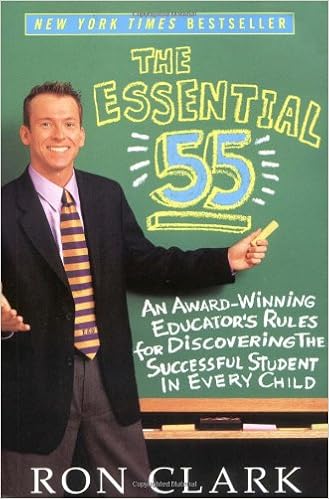
The Essential 55

The Essential 55: An Award-Winning Educator's Rules For ...

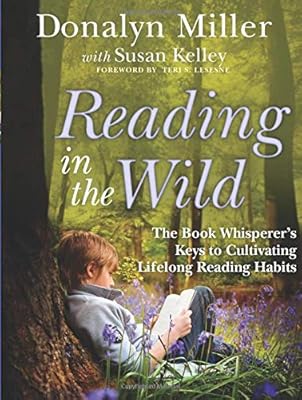
I went into my classroom to get everything ready for distance learning and searched everywhere I could think of for my Reading in the Wild and Novel Approach books. I could not find them. I am not sure where they are at this point which makes me sad.

I did, however, find The Essential 55. I guess fate decided my book choice. It has been a good read so far. I am on Rule 20 right now. I have gotten good insight into the author, Ron Clark, and how he runs his classroom. I think his approach to teaching and students is one that everyone should take. He definitely goes above and beyond for his students. I'm not saying that everyone needs to go out and raise thousands of dollars to have an impact on their students, but we can do what we can to give our students learning experiences they will remember forever. 

His approach to teaching brings the curriculum to life for his students and shows them how it will apply to their lives in the real world. Taking what they are learning and teaching them how to make business calls, write an ad for a newspaper, and write letters to approach businesses for donations are all skills they will need to have beyond school. We should approach our students and our teaching the same way. Give them skills that will help them succeed in life and apply it to the standards we are required to teach. 

As a reading teacher, I can bring in real life examples of texts that people use in their adult lives and show my students how to work through it. I can teach them how to have professional conversations, write letters, answer phone calls, behave in an interview, etc. All of these things have a literacy connection. Teaching my students to not only analyze characters in stories, but analyze the characters in their lives (friends, teachers, family members, etc.) will give them skills they need.

Ron Clark talks also about taking an interest in your students' lives. Not just a superficial interest. He mentioned learning how to double dutch. It took him a long time to learn. He failed numerous times in front of his students, but that is what they did at recess so he didn't give up. By the end, his relationship with them and their respect for him had grown. It's not enough to just ask questions about students' interests and then move on. Bring it up a few weeks later to let them know that you remember and really do care. 

The power of positivity is also apparent in the book. It seems obvious, but this is something we need to teach our students. Help them to understand it is better to shine a light so that everyone can see, than to keep the light hidden for only your use. Students love to grumble when given assignments. We need to help them see that to view things with a positive lens, or at least not a completely negative lens, will get them through their lives much happier. 

I still have more to go before I'm finished with this book, but I have learned quite a bit from the parts I have read so far. Let me know if you have read the book and what your favorite takeaways are from it.

Friday, March 27, 2020

Book Study

encrypted-tbn2.gstatic.com/images?q=tbn:ANd9GcS...   Amazon.com: Reading in the Wild: The Book Whisperer's Keys to ...   The Essential 55 by Ron Clark | Hachette Books
While our school is transitioning to distance learning I find myself with time to read. Of course I am still reading for pleasure (I just finished The Miraculous Journey of Edward Tulane and The Candymakers: The Great Chocolate Chase both of which were wonderful and I can't wait to recommend them to students), but this is a good time to enhance myself as an educator. I will have time to read all three of these books, but the decision I must make is: which one first?

I loved The Book Whisperer and have another blog post on that book. Reading in the Wild is supposed to be more practical tips for putting in place everything that Donalyn Miller stands for. I want to make my students wild readers.

A Novel Approach is going to help me structure class time around novels and self-selected reading. I want to learn a better way to approach this for next year so that I can incorporate the novels that I have picked out (Refugee, Restart, A Long Walk to Water, Love That Dog).

The Essential 55 is not reading specific, but just educator and student specific. This one will help with teaching students skills they need in order to get along in the world.

Whatever I decide, I'll come here to share my thoughts.

Sunday, October 7, 2018

Emotional


I love books that make me emotional. Books that get me angry or make me cry or really just having me gasping because of the suspense are my favorites. This past year I have read so many books that have evoked emotions in me.

Last year I read Esperanza Rising and I got so angry during that book. I literally wanted to punch a character. I cried a few times while reading and had to put it down multiple times so I could continue teaching. My students saw me get emotional and it led them to want to read the book as well.

This summer I read Drums, Girls, and Dangerous Pie and that book gave me all the emotions. It was very funny, but also such an emotional read because of the topic of childhood cancer. It made me angry at the way that the main character handled everything, but it also helped me understand the emotions of a family member that is having to deal with a sibling with cancer.

Last week I read Crossover and while I could see the foreshadowing in the text I still wasn't prepared when it happened. I had to put the book away because I was about to start crying in front of my students. They wanted to read the book that made their teacher cry.

I had a student tell her reading partner that she needed to "read it like Mrs. Seibel reads." We both looked at her and asked her what that meant. She went on to do her impersonation of me. I understood. I told her partner that she wanted her to use intonation and emotion in her reading. She asked me how you do that. I told her it's a skill that she needs to practice.

My students struggle with reading comprehension because they don't hear the conversational flow of the text. They don't use the punctuation to develop emotions. They don't hear the change in volume and emotion during the paragraphs. I need to help them feel what they are reading so they can experience the joy in reading. So many think that reading is boring because they read in a monotone voice without pausing or stopping for punctuation. They don't lift their voices at a question. They don't raise their voices at an exclamation. They don't let a comma pause the flow of the text to let it linger in their minds.

I want my students to have emotional reactions to their books.


Saturday, September 1, 2018

Year 10

I have started my 10th year of teaching and I am so excited.

New things I'm trying:

  • Composition books set up with The Book Whisperer sections I mentioned in the last post. I'm still working with the students on the best way to fill out their lists during class time. Maybe they need to take their composition books with them? I'm not sure.
  • Easy standards based grading - I'm not going all in with it because I don't have the resources and the rest of the school is doing traditional grading. However, I have started focusing on the standards that I'm teaching and breaking down assignments into standards so students know what the grade actually means. I have had more students interested in the grades now that they know "I'm doing great in main idea 100% and I need some work on figurative language 35%". 
  • Notice and Note strategies are starting off my year. I am doing one sign post each week and delving into it with picture books, short stories, and videos. I really hope these strategies will empower my students to try harder to understand what they are reading and interact with their books. A lot of kids think that reading is passive. It is completely the opposite of passive!
This year is going to be amazing and I'm thankful that I get to share my passion with over 100 new students! What excites you about this new school year?

Thursday, March 8, 2018

Teaching

As a teacher, I have never been one to stick to what the text book says, or to continuously do the same thing over and over. I am nearing the end of my 9th year teaching and I'm in my third content area and third grade level.

Each year I tend to reinvent. It is a positive and negative aspect of my life as a teacher. The positive is that I'm always looking for different ways to get the information across to the students and always looking for the best ways in which to reach the students. I am constantly wanting to try out new things. The negative comes in that I need to stick to things for longer than I do. Once I see that something is working I need to write it down so that I can do it again next year. My organizational skills need some work.

I am in the midst of planning out my next year and how I want to do things differently. Instead of a binder I want to use a composition book with my students. I want to implement it the way that The Book Whisperer does: a To-Be-Read list, a Currently Reading list, and a Reading Response section. I am trying to find the way to incorporate those things that will work best for my students.

I also want to use storyboardthat with my students. I had them do comic strips this year over The Hero and the Minotaur. They did awesome on the comic strips, but I think some of my more artistically challenged students would have preferred to have the artistry done for them by a website.

I also know that I need to do more work with vocabulary next year and, I hate to say it, more test taking strategies. The sad fact is that these kids have to know how to read a test and answer questions.

One of the best things about always wanting to reinvent my teaching is that I am far from teacher burnout. I love what I do. I love going into work. How do you reinvent your teaching?

Sunday, February 25, 2018

Must Reads

Some books should be read because they teach amazing lessons. Some books should be read because they are immensely enjoyable (for me that means that they make me FEEL something). Some books should be read because they give you a new view of a topic that you couldn't otherwise have. Some books should be read because others think they should be banned. The two books I'm talking about fit all of those categories.

The Hate U Give by Angie Thomas will stay with me for a while. I wanted to cry through much of it, but it was light-hearted enough that it didn't send me into a depression. I loved that there was a white kid in the book that was a part of the life of one of the main characters, but still kind of clueless as to what she was going through. It shows that no matter how hard we try, we cannot know what goes on in the lives and minds of others. I love that it was realistic in regards to the friendships and everything else that happened.
There are parts of it that I can see people not wanting high-schoolers to read:the relationship parts (but honestly, it's what high-schoolers are dealing with),the drug references and gangs (however those aren't things that are unfamiliar to high-schoolers either), and the language.
The content of the book and what the characters go through are things that high-schoolers need to read, whether because they experience it as well, or that it is foreign to them. Just because a book has things that may be objectionable to some doesn't mean it doesn't have worth. As a white woman I needed to read this book and the book I'm about to discuss. I don't see things the way some people do and I needed to have their lens in front of my eyes at least for a little while. I have some of the fears that were expressed in the books, however not to the extent that was described in the books. I am thankful for the life that I lead, and thankful that I got to experience someone else's view of the world through the safety of a book. I am blessed.


All American Boys by Jason Reynolds and Brendan Kiely is similar to The Hate U Give, but incredibly different at the same time. This book is so good. There is a lot of cursing which fits with the characters, but I still find to be too much. However, the content of the book is what makes it a worthy read. I would love to know what happens next, but the last line of the book was perfect and I wouldn't want anything to mess that up.
This is another book that high-schoolers should read. I am not sure that middle-schoolers are the right age group for this text, although I did recommend these two books to my students for when they get older.
I love that it goes back and forth between Rashad, the kid beaten by the police, and Quinn, the white kid who witnessed it. Seeing how this event impacted their lives and the lives of their families and friends gets you thinking. The tough questions that are asked, that are uncomfortable, that is why I think it should be read by students. 

I am able to look through things with a different lens after reading these two books and I am forever grateful that they were put into my hands. 

Wednesday, February 21, 2018

Readers Block

I know that writer's block is a thing, but I think reader's block is as well. I was a reading machine at the beginning of the school year reading more books in a semester than I have probably ever during the school year.

I read:
  1. Where the Red Fern Grows by Wilson Rawls
  2. Book Scavenger by Jennifer Chambliss Bertman
  3. Restart by Gordon Korman
  4. Projekt 1065 by Alan Gratz
  5. OCDaniel by Wesley King
  6. The Indian in the Cupboard by Lynne Reid Banks
  7. The Name of This Book is Secret by Pseudonymous Bosch
  8. Save Me a Seat by Sarah Weeks and Gita Varadarajan
  9. Esperanza Rising by Pam Munoz Ryan
  10. Pickle by Kim Baker
  11. A Series of Unfortunate Events the Bad Beginning by Lemony Snicket
  12. The Gallery by Laura Marx Fitzgerald
  13. Spy School by Stuart Gibbs
  14. Book Whisperer by Donalyn Miller
  15. Notice and Note by Kylene Beers
  16. All American Boys by Jason Reynolds
  17. The Hate U Give by Angie Thomas
I was on a roll. 

I cannot keep my interest in a book right now. It's been almost two months since I've completed a book. I've started and stopped: Prince Caspian, Parker Inheritance, and Fuzzy Mud. I'm attempting to read the first book in the Princess Diaries series. 

I am sad that I am having this much trouble sticking with a book to completion. I want to set a good example for my students and keep reading and finishing books, but I am struggling right now. I think the problem was that I read the Jason Reynolds and Angie Thomas books after each other and they were so amazing that I'm having trouble with books that aren't hitting me in that same way. What do you do when you have reader's block? 

Thursday, February 8, 2018

Book Whisperer

After reading The Book Whisperer by Donalyn Miller I have changed a few things about my reading classroom.
1. Status of the Class
2. Independent Reading Time
3. Segmented classroom schedule

1. Status of the Class
Taking a Status of the Class on the books that my students are reading is something that I used to do as a history teacher. I would ask the students the title of the book they were reading, what page they were on, and how many pages the book had in total. I would do this every day with my homeroom. It allowed me to keep track of my students' reading lives, but only inasmuch as learning what books they were reading and how many pages they were reading each day.

After reading The Book Whisperer I have a new appreciation for Status of the Class. I have started using it in my reading classroom with all five of my classes. This time I call the students to my conferencing table one at a time to get the same information I used to get, only now I also ask the students about their books. I am learning which students are enjoying their books, which students have a hard time recalling information, which students are reading a book that may be too difficult, and more. I am going to start asking specific questions instead of my regular, "What's going on in your book right now?" including *What problem is the character facing?* *What do you think is going to happen next?*

2. Independent Reading Time
Since I only get to see my classes for 55 minutes each day, if i don't give them time to read in class I would never be able to figure out which students pretend to read. Now I am able to see which students are just going through the motions. This also allows the students to get practice at reading for extended periods of time. Some students will not be able to read at home due to many different circumstances and if I don't allow them time to read in class, they might not read at all on their own time. Giving them independent reading time with books they want to read they are starting to find a love of reading. Of course, not all students are going to love and embrace this time, but it's my job to work with those students and get them there.

This also gives me time to read. I take time sometimes to read along with them. When they see an adult excited about reading and actually reading and completing books, that enthusiasm spreads. Students need role models in so many different areas of their lives and reading is an important one. I keep an updated board that lets students know the title of the book I am reading, and because they see that and see the book in my hands they tend to ask questions about the book. Soon after I normally see a few students checking out that same book.

3. Segmented Class Time
This is one of my favorite new ideas from The Book Whisperer. My class is not segmented into thirds like she suggests, but that wasn't a neat enough schedule for me with 55 minutes. 55 doesn't split well into thirds. My schedule is this:

  • 10 minutes whole class novel - right now is Hatchet, next will be A Wrinkle in Time
  • 15 minutes mini-lesson - sometimes this comes from the textbook that was adopted for our reading curriculum, sometimes it's a picture book, sometimes it's an article from NewsELA or readworks.org
  • 15 minutes independent practice - this is time I use to pull students for extra practice and allow them to read, work on responding to reading, or work on practice sheets
  • 15 minutes independent reading time - this is time they read silently and I can work on Status of the Class 
I have set up alarms on my computer that go off at the end of each of these times. It keeps me on track, but also lets me know when time is up. I like that it's a guideline and I can go over a bit if needed or end early if the lesson is finished. The students have gotten used to the alarms as well and know what they mean. I always make sure they get that 15 minutes of reading time and the 10 minutes of novel time. 

Something new that I am going to start doing is Reading Fridays. We will do the whole class novel for 20 minutes on Fridays and then students will have 35 minutes of independent reading time. I love this. This allows my students to get an hour and 35 minutes during school time where they are reading every week. How awesome is that?!

If you have read The Book Whisperer, what parts of it have you implemented?

Go With the Flow